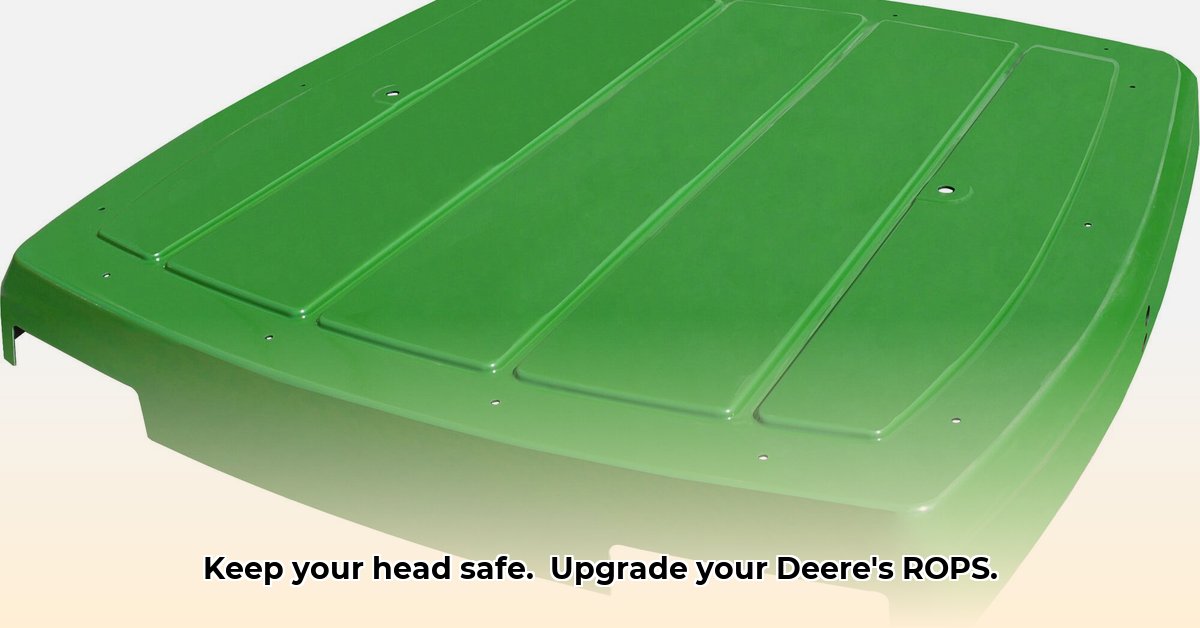
Protecting yourself while operating a John Deere tractor is paramount. This comprehensive guide explores Rollover Protective Structures (ROPS) and canopies, essential safety features for sustainable and safe farming practices. We'll cover compatibility, selection, installation, maintenance, and the crucial cost-benefit analysis that underscores their importance. For more information on John Deere tractor values, check out this helpful resource.
Understanding ROPS and Canopies: Your Tractor's First Line of Defense
A ROPS (Rollover Protective Structure) is a robust frame engineered to safeguard the operator should the tractor overturn. It acts as a protective cage, minimizing the risk of serious injury or fatality. Canopies, on the other hand, provide overhead protection from sun, rain, and debris, enhancing operator comfort and productivity. Together, they significantly reduce risks associated with both accidents and harsh weather conditions. Isn't protecting your well-being worth the investment?
John Deere Tractor Compatibility: Ensuring a Perfect Fit
John Deere tractor models vary, and ROPS and canopy compatibility depends on the specific model. Many newer models include factory-installed options, but aftermarket solutions are widely available for older models. Reputable manufacturers like Iron Bull Manufacturing 1 offer various options for a broad range of John Deere tractors. Always consult your owner's manual or your local John Deere dealer to guarantee a perfect fit. This verification step is crucial for ensuring optimal safety performance.
Choosing the Right ROPS/Canopy: A Tailored Approach to Safety
Selecting the appropriate ROPS and canopy involves considering several factors:
- Tractor Model: Compatibility is paramount. Incorrect fitting can compromise safety effectiveness.
- Budget: Factory-installed systems usually command a higher price than aftermarket alternatives. Careful budget planning balances upfront costs against the long-term value of safety.
- Climate and Working Conditions: Harsh climates necessitate robust protection, often justifying the investment in both ROPS and a full canopy. Milder climates might allow for a canopy-only solution.
Comparison of Options:
| Feature | Aftermarket Options | Factory-Installed Options |
|---|---|---|
| Typical Cost | Generally Lower | Generally Higher |
| Availability | Widely available, even for older tractor models | Usually only available on newer models |
| Installation | Often requires professional installation | Typically requires professional installation |
| Warranty Coverage | Varies by manufacturer and installer | Often covered under the tractor's original warranty |
| Potential Drawbacks | Might require more research to find proper fit | Can be more expensive upfront |
Installation and Maintenance: A Step-by-Step Guide to Safety
Proper installation is paramount for effective protection. While some simple canopies might allow for DIY installation, professional fitting is strongly recommended for ROPS. Improper installation drastically reduces its protective capabilities.
Installation Steps:
- Consult the Manual: Thorough review of manufacturer instructions is critical for secure and effective installation.
- Preparation: Gather all necessary tools and components before commencing installation. This prevents delays and ensures a smooth process.
- Meticulous Adherence: Follow the manufacturer's instructions precisely. Precision is key for the structural integrity of the safety system.
- Stability Check: After installation, rigorously test the stability and secure attachment of the ROPS/canopy. Any movement or instability should be immediately addressed.
- Regular Inspections: Regular inspections are crucial. Check for any signs of wear, damage, or loose bolts. Proactive maintenance prevents potential hazards.
Cost-Benefit Analysis: An Investment in Safety
While the initial cost of ROPS and canopies can seem substantial, the potential savings from preventing accidents far outweigh this investment. Consider the potential costs of medical bills, lost workdays, and the immeasurable value of human life. This investment is a small price to pay for unparalleled peace of mind. Isn’t the safety of yourself and your team worth it?
Regulatory Compliance: Adhering to Safety Standards
Local regulations regarding tractor safety vary. Familiarize yourself with the requirements in your area. Compliance is not merely a matter of avoiding penalties; it's a commitment to responsible farming practices. Contact your local agricultural authorities or equipment dealers for clarification on relevant regulations.
Conclusion: Prioritizing Safety in Sustainable Agriculture
Investing in ROPS and canopies is an investment in sustainable and responsible farming practices. It signifies a commitment to the safety and well-being of farmworkers. Always consult with your John Deere dealer or agricultural safety professionals for tailored advice on maximizing safety and compliance. Remember, safety should always be the top priority.